The filmmakers’ 18-minute short film WALTZ FOR THREE has that quintessential magic of a superb full-length feature. It was one of the many superb screenings at the 2026 Dances with Films Festival that recently wrapped.
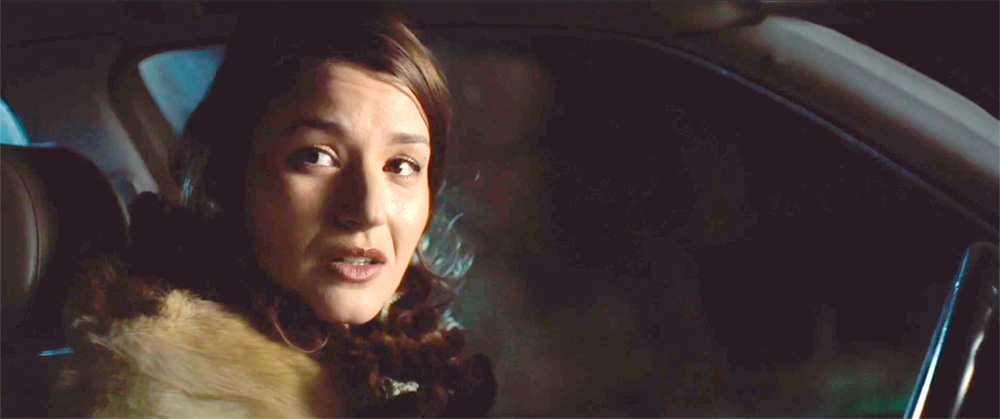
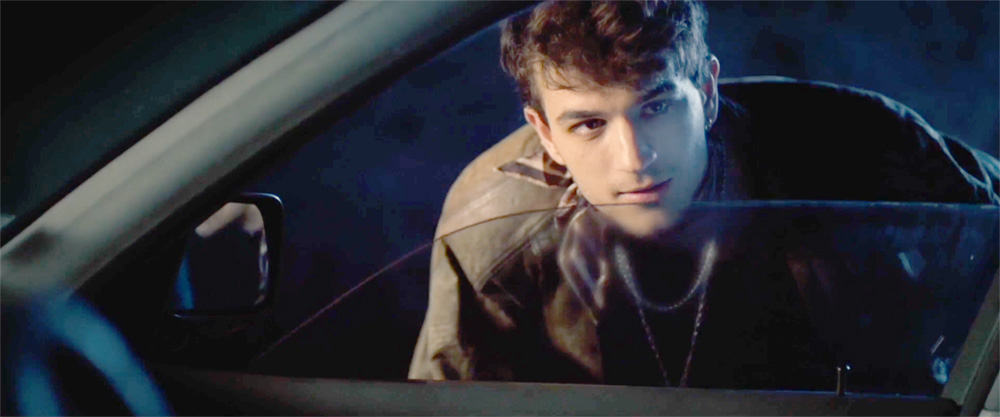
WALTZ FOR THREE is an 18-minute short film directed by Oriana Ng. French subtitles. The story tells of a wealthy woman, Agnès who drives into a forest where prostitutes and their patrons hook up. She approaches Jean, a male prostitute, but she’s not seeking sex — she’s looking for companionship.
Jean complies and accompanies her to her mansion. Once there, while Agnès changes into comfortable clothes, Jean notices a ballerina statue and offers to dance with her. The film explores the transactional nature of paid intimacy while examining deeper themes of human connection, loneliness, and the emotional emptiness both characters carry.
The film is both poetic and lyrical and unfolds like an intimate chamber play, relying on silences, glances, and body language rather than dialogue. It’s a meditation on the tensions between connection and isolation, intimacy and restraint. It has screened at numerous festivals including St. Louis International Film Festival, Dallas International Film Festival, and Dances With Films 2025, and has been recognized in multiple Oscar-qualifying competitions. WALTZ FOR THREE filmmakers at the time of this the WORD Q&A were planning on overseas screenings.
WALTZ FOR THREE: Edited for Style, Context, Clarification.
The Interview below rolled with Director Oriana Ng describing festivities at the prestigious 2026 Dances With Films Festival which recently wrapped.

Dances With Films (DWF:NY) 2026 was the 4th annual New York City edition of the bi-coastal independent film festival that champions creative, filmmaker-driven cinema with a focus on truly independent work — films made without major studio ties. It took place January 15–18 at Regal Union Square in Manhattan, featuring a diverse lineup of about 157 films across formats including narrative features, documentaries, shorts, midnight genre films, family films, and television/web pilots.
The festival showcases world premieres and premieres of indie films by emerging talents from around the world. DWF:NY has quickly become a notable platform for launching new voices in cinema, attracting audiences, critics, and industry professionals alike. Filmmaker-driven cinema is independent films where the creators’ artistic vision comes first, rather than studio-driven, mass-market priorities. The best of the derring-do filmmakers who sneer at the risk of making films on their terms, – a bit of an exaggeration this reviewer admits but not that much.
On with the Q&A
Director Oriana Ng
I mean, it’s really great. I’m really enjoying all the films. They’re very different, but the movies in our block were really exceptional. I was just blown away. Dances With Films is a really great festival for filmmakers. I also really like their selection process because of Lindsey Smith-Sands, festival director. She watches every single submission, and that’s very rare because sometimes festivals will take from the Sundance or whatever big festival, and then they’ll take those films, which is fine, of course, but I just appreciate that she and her team have their own taste and watch every single submission.
Gregg Morris-the WORD
Okay. So my big question is, why did you make this movie?
Director Oriana Ng
The WALTZ FOR THREE one, right? {Note: The filmmakers had another superb short that screened but in the course of the conversation the focus was THE WALTZ. This reviewer luv-ed both of them.}
Gregg Morris-the WORD
There were only two characters in the film, so I kept wondering about where the third dancer was. I mean, that’s what was going in my head, but the thing that I liked about it, that my buttons were being pushed, and I could empathize and sympathize the awkward moments that weren’t all … I mean, it pulled me right into the movie …
Gregg Morris-the WORD
… and kept me there. It’s also a movie that you have to see. For me, you have to see at least three or four times because I pick up on stuff that I didn’t see the first time.
Director Oriana Ng
You’ve watched it more than once?
Gregg Morris-the WORD
This time, I’ve done it two and a half times.
Director Oriana Ng
Oh my goodness …
Gregg Morris-the WORD
No, no, no. It’s okay …
Director Oriana Ng
It’s so long. It’s 18 minutes.
Gregg Morris-the WORD
Oh, that’s nothing. I mean, I did the 18 minutes. It was 18 wonderful minutes. (So engrossing because time seemed to pass fast).
Director Oriana Ng
Oh, thank you.
Gregg Morris-the WORD:
But I miss stuff. I mean, I want to write a review or something, and one of the gripes I have with other reviewers is they watch the film and then they interpret what they believe is going on and it has nothing to do with what the director or the filmmakers had in plan. So for me, to try to deal with that kind of dynamics, I have to see it more than once …
Gregg Morris-the WORD
… because I don’t want to write a review unless I’ve seen the film three to four times. Oh, believe me, that’s the only way I … Well, one, that’s the only way to really enjoy it because, “Wow, I didn’t see that, and wow, I thought that …” And if you’re with the right people at the right time that you’re watching this, it’s just a really glorious experience.
How’d you come up with the idea?
Director Oriana Ng
It was a mixture of two things. I was dealing with my … I found out my grandmother was very sick and had cancer at the time, so I was just thinking about grief, and I had grief in my life before and just thinking about that and loneliness because I think grief is something that… I think joy brings people together, and I think grief, even if you’re very close to someone, it kind of separates people because we all deal with it in different ways.
So I was thinking about grief and loneliness. And then, I’m very close friends with the actor, Mikael Mittelstadt, and I wanted to work with him because he’s such a close friend, and we had done little exercises together and we just get along really well.
The problem was I didn’t know what to cast him as, and at the time, he would get kind of typecast as this bad boy, edgy guy. I knew he had all this sensitivity that he, at the time, wasn’t cast as. Since then, his career has kind of skyrocketed, and he’s doing very well, and he’s done a lot of deeper roles, but I just wanted to find a role that could keep his kind of edginess like sexy edginess or whatever he has going on for him, but also where he would be able to show a sensitivity that, a vulnerability he hadn’t shown before.
He kept quoting Marcello Mastroianni. To me, he was saying, because Marcello Mastroianni, the great Italian actor, said that an actor is a, whether or not you agree with that statement.
And so, one day, he was saying that to me, and I looked at him, and I thought, “Oh, this could be interesting for you.” I’m also interested in gender reversals in movies. Even in Subway Crush, it’s like the guy who’s being objectified, whereas most of the time, it’s the woman. So with this, having a male prostitute picked up by a woman is something that I hadn’t seen before or very rarely. And so, I was thinking, ‘Oh, that could just be interesting as how to explore that.’
Gregg Morris-the WORD
What do you want your viewers to get out of this film? Or …
Director Oriana Ng
Yeah. Yeah, go for it.
Gregg Morris-the WORD
Is that okay?
Director Oriana Ng
Yeah, yeah. I think if you can kind of connect to that sense of, if you’ve lost someone, which most people have, and there’s that moment of brief fleeting joy where you find them again, but then lose them again. I think that was what we were trying to recreate with the actors and also just the intimacy.
I don’t know if they try to connect, and maybe they do, maybe they don’t, but that fragile moment when you’re really opening up to someone, you’re really with someone. If, as an audience, you watch that and you feel that, I think that would be great. Yeah. I don’t know. Abby, I don’t know if you want to add anything to that. She’s worked on it. She has held me and she’s also a great writer, director, and she has held me through the process, logistically, emotionally, everything, so she knows. She was like through every rewrite of the script, so maybe you have a more objective point of view.
Producer Abigail Prade
Well, no, I think, of course, I think it fits because we were working on the film and you’re going through that situation with your grandmother. I think that grief and I think I also felt it in my life, I think it kind of permeates the film, that melancholy.
So I think what you were interested also in exploring was working with the actors and kind of really getting to know two characters really well and also work with them and improvise with them, so it was really about those two characters that are maybe in a more transactional relationship if they’re able to find that point of intimacy, and I think they do reach that moment. But as you said, it’s fragile because then they get back to normal life, and then they go their own way.
Gregg Morris-the WORD
Wow. Okay. I’m going to bounce something off you. I did some background research and to find out what other reviewers were saying and what they thought they were saying and stuff. There’s this one line, “The film has been described as a meditation or human connection and an exploration of how closeness does not always equate to understanding.” What do you think about that? Is that…
Director Oriana Ng
An exploration of how close –
Gregg Morris-the WORD
I’m sorry. I’m going to keep going with that. The film has been described as a meditation on the human connection and an exploration of how closeness does not always equate to understanding.
Director Oriana Ng
Yeah, I kind of like that. I like that. I would say it depends what understanding means because I think he doesn’t understand her circumstances and she does not understand his circumstances, but at the same time, there’s like a primal …
Gregg Morris-the WORD
Primal?!
Director Oriana Ng
…emotional understanding that they have in one moment, and it goes beyond context, background, who you are. It’s just like empathy. I think when he holds her, I think he’s really lost, and he did that so well because I kind of let them find what to do in that scene.
A lot of it came from them and you can really see he’s lost, but he’s there for her and he’s maybe taking on something bigger than he can take on or he thinks he can take on. So I kind of agree. I think he doesn’t understand what’s going on, but he somehow still manages to connect with her, but maybe you disagree, Gregg. I don’t know.
Gregg Morris-the WORD
Oh, no, no, no, no, no, no, no, no.
Producer Abigail Prade
I think it’s very beautiful, actually, the way, and it’s like that reviewer said it very eloquently, maybe more eloquently than we can put it, but that’s also kind of the fun for us to see when people are getting out of the film, what they’re taking away from it. But I think I agree that there is a moment where they connect and they are close.
And actually, maybe it’s also an interesting question. Maybe you don’t need to understand each other in that moment. Maybe being there for each other, even if you don’t fully understand someone’s circumstances, maybe that could be enough at least for a moment.
Gregg Morris-the WORD
I hope I say this right. One of the really powerful things about that, there were a lot of what I call powerful things, was that it was 18 minutes, it’s considered a short film. So my understanding, and this is my understanding, so I know there might be holes in it, is that talking to other filmmakers who make short films, they make the short film in order to be able to make a feature film.
So if you were thinking about making a feature film, how would you do that? Because this felt like a feature film but it was in 18 minutes. And so, after the second time I watched it. .. What are your plans for the film?
Director Oriana Ng
I don’t know. I mean, I think when you have something that’s more or less working, which hopefully this is, it’s always fragile to kind of want to make it a bigger thing, but if a good idea came along, if, when I did think of it, I was thinking either I would choose her or him and make the feature all about either her or him, and then this Waltz encounter would just be kind of maybe in the middle or a little bit between the middle and the end like maybe two-thirds.
And maybe if we were following Jean, like his character, maybe we would see different encounters he’s having with different clients and a little bit more of the banter with the women at the beginning, the other prostitutes. And then, at one point, he would meet this mysterious woman, and that would somehow change his life. And then, we would get a sense that how things have changed for him and then maybe the movie would end, so I don’t know.
Gregg Morris-the WORD
Okay. So I guess the way that I asked the question is I assumed or thought you were already working on a feature, but you’re not. You’re accommodating my question speculating about what you do, but you haven’t already made a decision about whether you’re going to do it or not.
It’s a possibility, but it’s not like what with other (short) filmmakers, ‘Yeah, we did this and we know what we’re going to do this, and then we aren’t going to tell you what it is about, but you can say that it’s going to be a full feature film.’ So …
Producer Abigail Prade
Yeah, this film wasn’t made as a proof of concept for a feature film. It really was just as short on its own in the way at least it was conceived.
Gregg Morris-the WORD
So what are you guys planning on next? Oh, well, first, where do you go from here? You’re here in New York City with Dancing. Where does the film go from here? Where are you going to be showing it or screening somewhere else?
End of Part 1